RSS is dead. Stop crying about Google Reader.

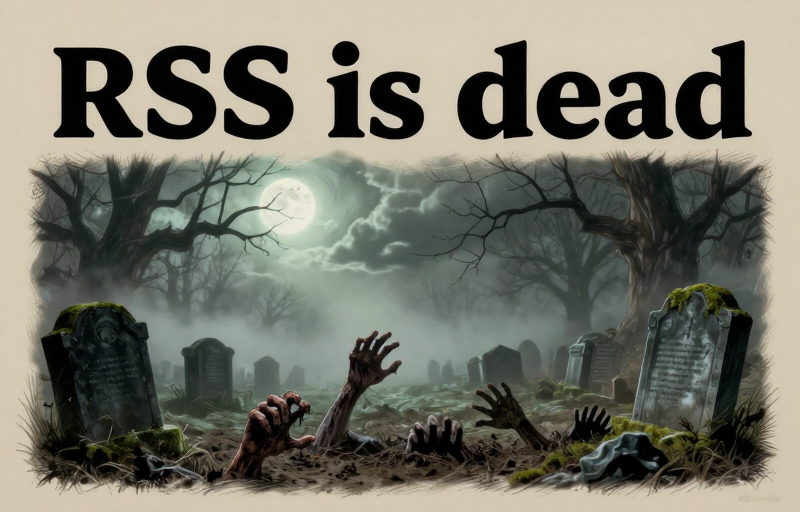
Every couple of years, some 90s kid dusts off their nostalgia and publishes another "RSS is not dead, long live RSS" essay. The web was anarchy and freedom, decentralized. Google Reader was fantastic. And honestly, some of that is true. I miss my spam emails about v1agr4 and the Ukrainian girls who wanted to meet me /s. But here's the reality:
The average person does not care.
- They don't care about algorithms silencing opinions that don't fit the mainstream.
- They don't care about privacy until it's too late. data leaks, identity theft, stalking.
- They don't care that influencers mostly run paid reviews ahead of the products regular people can't even buy.
And the social feed won because it was profitable. RSS was not.
RSS is "too honest" for the advertising business:
- It's an open XML format. No tracking, no profiling, no dark patterns.
- It doesn't optimize for engagement or watch time; there is no "Like counter" you get content, in the order you subscribed to it.
- It hands the reader full control, and a reader who controls their own feed is not a revenue stream. There is no algo that silence the RSS you have to unsubscribe from it.
That's why Google killed Reader on July 1, 2013, months after announcing it, citing "declining usage." Usage wasn't declining; profitability was. Feedly signed up 3 million new users within two weeks of the announcement. People wanted RSS. The market just didn't.
Deal with it.
The majority of people will always choose the easy, free path of doomscrolling over the harder, freer path of setting up a client. That's not a bug of the web; it's how the incentives are structured.
But if you're part of the minority that wants to own your information diet, the tools have never been better:
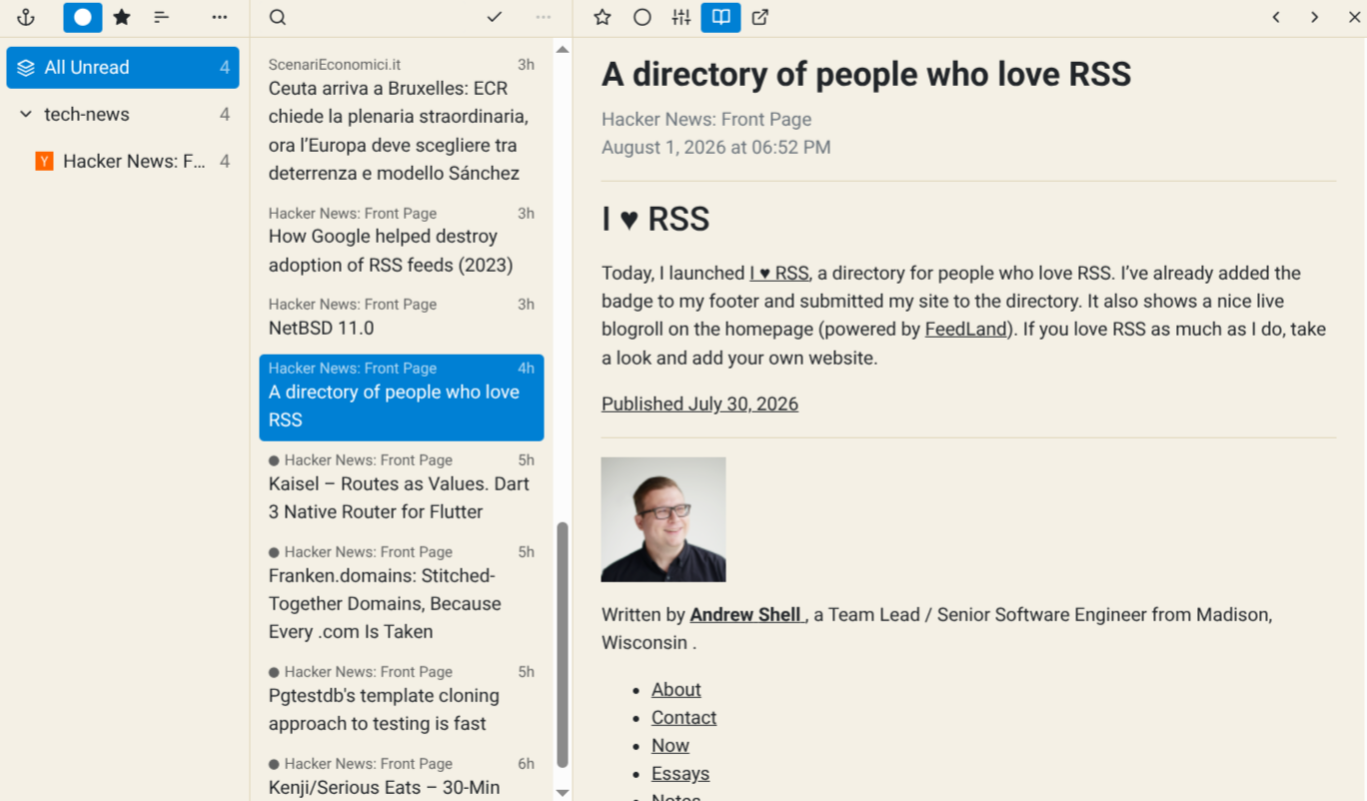
- yarr — a minimal, self-hosted, web-based RSS reader. A single Go binary plus SQLite, runs as a desktop app or a server, supports RSS/Atom/RDF/JSON, OPML import, keyboard shortcuts, full-text search, and the Fever API. No JavaScript bloat, no accounts, no algorithm.
- rss-bridge — generates RSS feeds for websites that don't expose them. 500+ "bridges" cover Reddit, YouTube, Mastodon, Telegram, TikTok, Twitch, and more. Output as RSS/Atom/JSON, with caching so you don't hammer the source sites.
- searxng — a privacy-respecting metasearch engine aggregating 70+ search engines without tracking you. And yes, it exposes RSS, so you can subscribe to a search query as a feed: track a topic, a product, a job posting, with no profile required.
- ..and then you have local AI integrations to do advanced scraping :P
RSS didn't die, it just stopped being convenient for the people who sell your attention. The tools are free, open source, and entirely yours. It's one docker run away. It's your choice, You can't convince a slave that freedom is better because if he/she never tasted it.