Opencode vs Pi: Local LLM Benchmark Results

Local LLMs are more powerful than many people realize. While smaller models are certainly less capable than larger online alternatives, they can leverage tools to identify errors and self-correct, significantly improving accuracy. For many use cases, local models offer a compelling option: no subscription fees and complete privacy since they don't require an internet connection.
Opencode and Pi as Claude Code Alternatives
LLMs don't run in isolation. A harness runner is essential to create context and provide Skills or MCPs. Some harnesses start with a rich initial prompt, while others take a more minimal and modular approach. The model you choose matters most, but your harness selection also influences final results in terms of speed and correctness. A larger context means more guidelines, but it can also mean slower performance and occasional confusion for smaller models.
The Benchmark
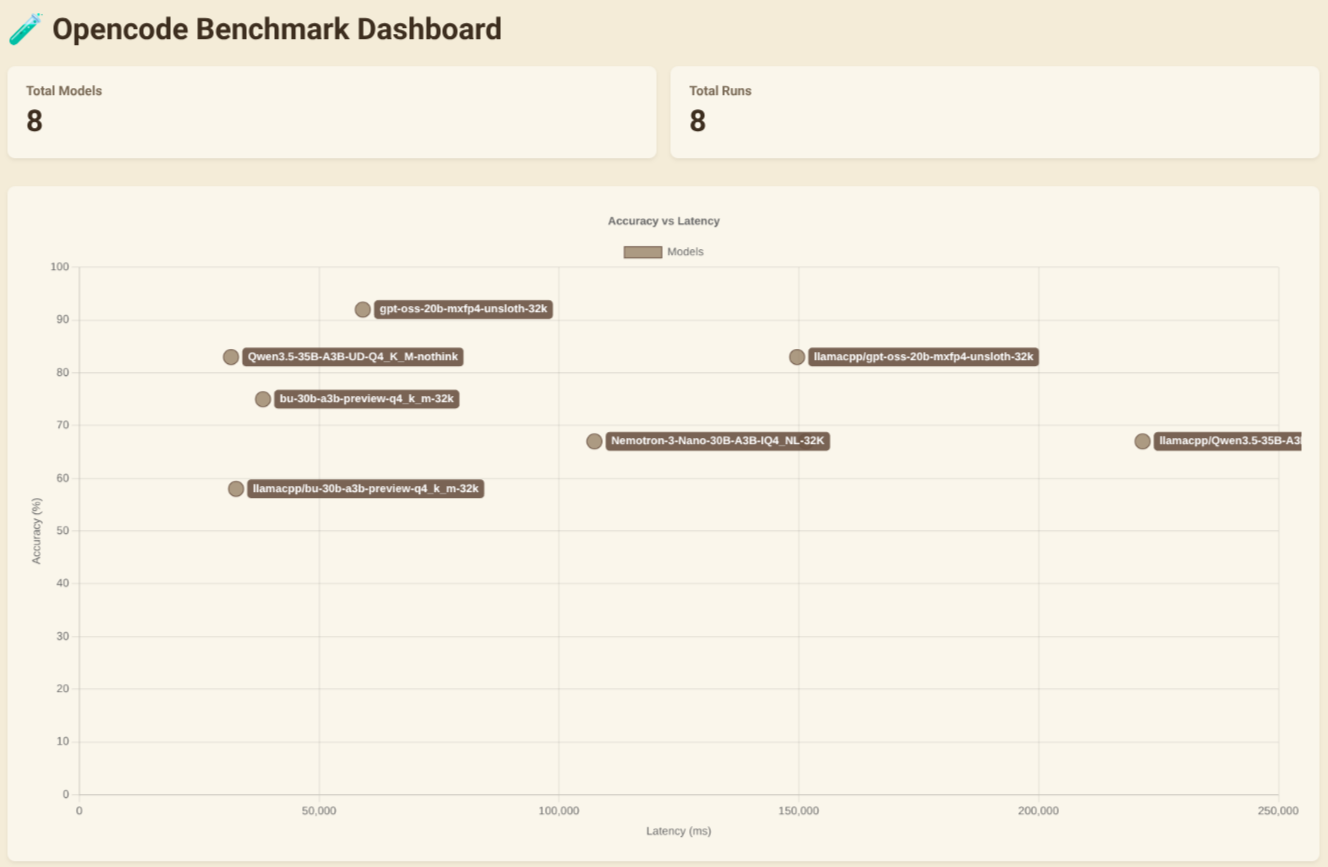
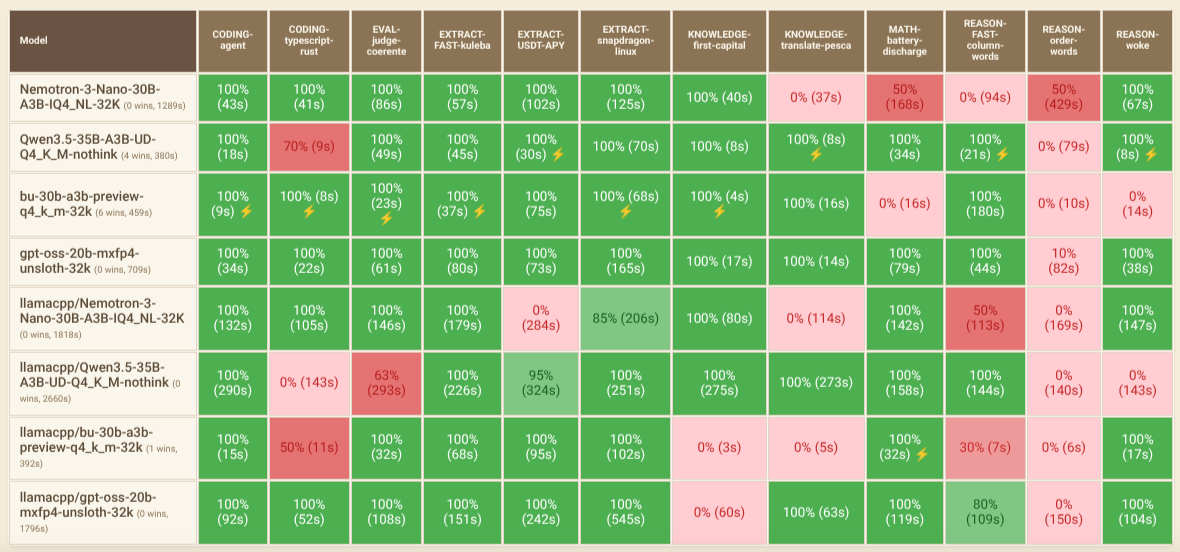
I tested both Opencode and Pi using the Opencode Benchmark Dashboard with various models and custom prompts.
Here's how to run prompts in non-interactive mode:
opencode run --model "llamacpp/bu-30b-a3b-preview-q4_k_m-32k" "scrivi la prima capitale dell'italia"
pi --model bu-30b-a3b-preview-q4_k_m-32k -p "scrivi la prima capitale dell'italia"
Models Tested
- Nemotron-3-Nano-30B-A3B-IQ4_NL-32K
- Qwen3.5-35B-A3B-UD-Q4_K_M-nothink
- bu-30b-a3b-preview-q4_k_m-32k (qwen3-vl family)
- gpt-oss-20b-mxfp4-unsloth-32k
Models with the llamacpp/* prefix were tested with Opencode, while those without it were tested with Pi.
My Key Takeaways
- Larger context sizes typically hurt accuracy and speed, especially when filled with rules not needed to reach the correct answer.
- gpt-oss-20b-mxfp4-unsloth-32k delivered the best results for both accuracy and speed in my tests.
- Qwen3.5-35B-A3B-UD-Q4_K_M-nothink is the best choice if speed matters more than accuracy.
 anomalyco
 badlogic
 grigio